
Satellite images reveal the full extent of damage to Iran’s nuclear facilities: How effective are the US and Israeli air strikes?
Jun 26,2025 | vape
Satellite images reveal the full extent of damage to Iran’s nuclear facilities: How effective are the US and Israeli air strikes?
Since June 22, 2025, the United States and Israel have launched continuous air strikes on several key nuclear facilities in Iran, causing global shock. With the release of high-resolution satellite images , the damage to Iran's core uranium enrichment and nuclear research facilities such as Fordow, Isfahan and Natanz has gradually surfaced .
What effect did this joint strike, which was called the "invisible blitzkrieg" by the outside world, achieve? This article will give you a comprehensive analysis.
📡 1. Ford: A Crack in the Mountains
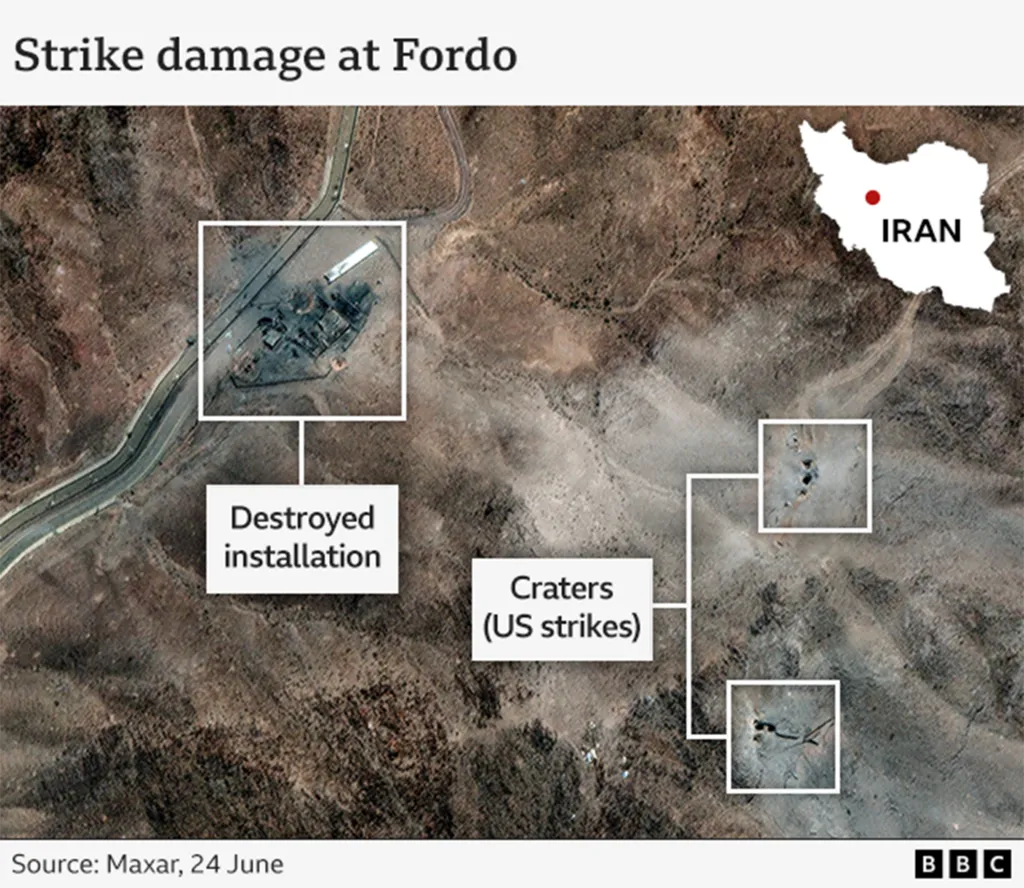
Location : The Fordow nuclear facility near the city of Qom, built inside a mountain, is Iran's most strategically valuable underground uranium enrichment station.
Overview of the attack :
-
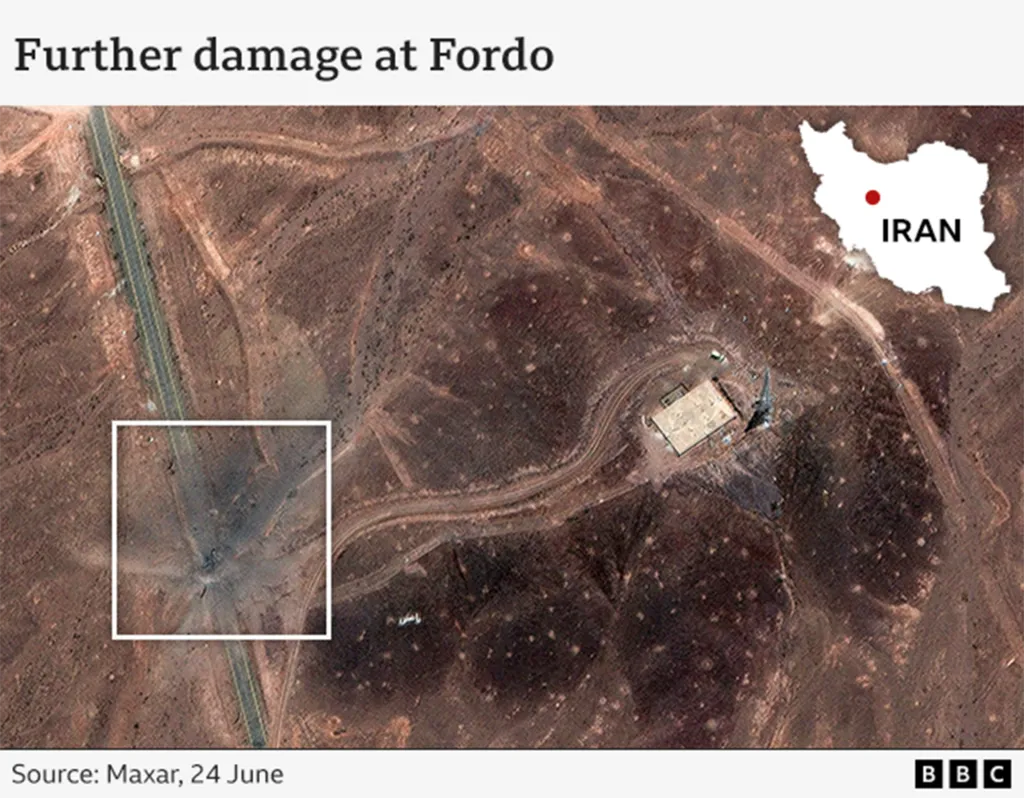
June 22 : The U.S. military uses bunker-busting bombs to attack Fordow, creating at least six large craters ;
-
June 23 : Israel strikes Fordow again, focusing on destroying passages and tunnel entrances ;
-
June 24 : Maxar satellite images show new craters and obvious signs of damage at multiple tunnel entrances, passages and peripheral facilities .
Analysis and evaluation :
-
The amount of dust and surface damage suggest that underground structures may have been damaged by shock waves ;
-
British expert Trevor Lawrence pointed out that if the explosion shook out the concrete on the ground, the underground structure would most likely be severely damaged ;
-
Repairs could take years or even lead to complete collapse .
🔩 2. Isfahan: Conversion facility “turned into a black hole”?
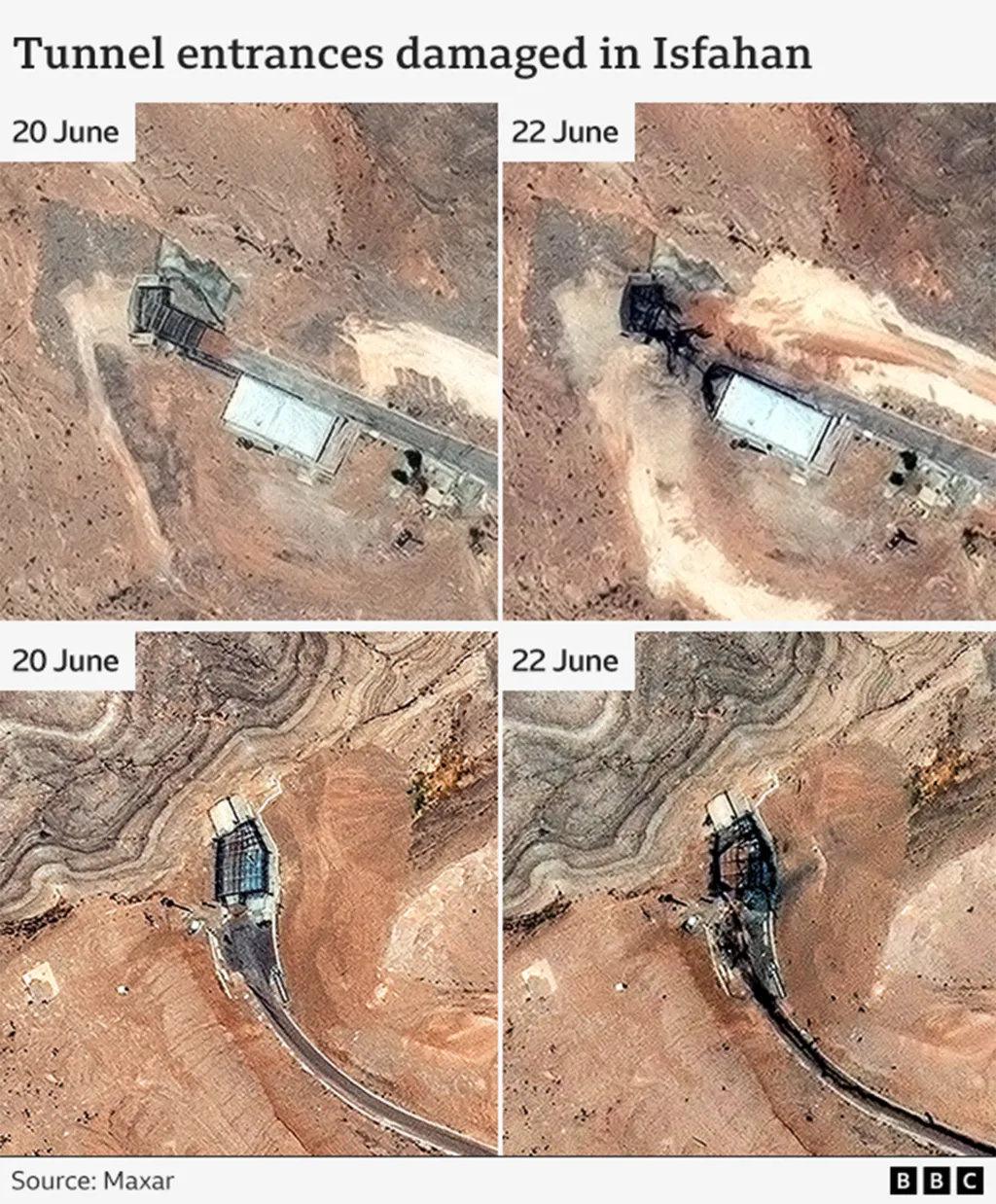
Location : One of Iran's largest nuclear research centers, located on the outskirts of Isfahan, with a uranium conversion plant .
Overview of the attack :
-
After suffering Israeli airstrikes , it was attacked by the US military;
-
"Where it used to be on the map ... it's now completely black," the U.S. official said.
Satellite images show :
-
Several core buildings were severely damaged;
-
The northern tunnel entrance had structural damage , with black debris emerging from some areas, indicating a possible internal fire or explosion ;
-
Despite being protected by earth mounds, some entrances sustained "moderate structural damage".
Expert opinion :
-
If the internal fire is true, it will take at least several years to recover ;
-
Some entrances may be reopened to traffic within weeks if they are only covered with sand , but it remains uncertain whether key facilities can still operate.
⚙️ 3. Natanz: Recovery work hidden under the crater
Location : Iran's oldest and most important uranium enrichment site.
Overview of the attack :
-
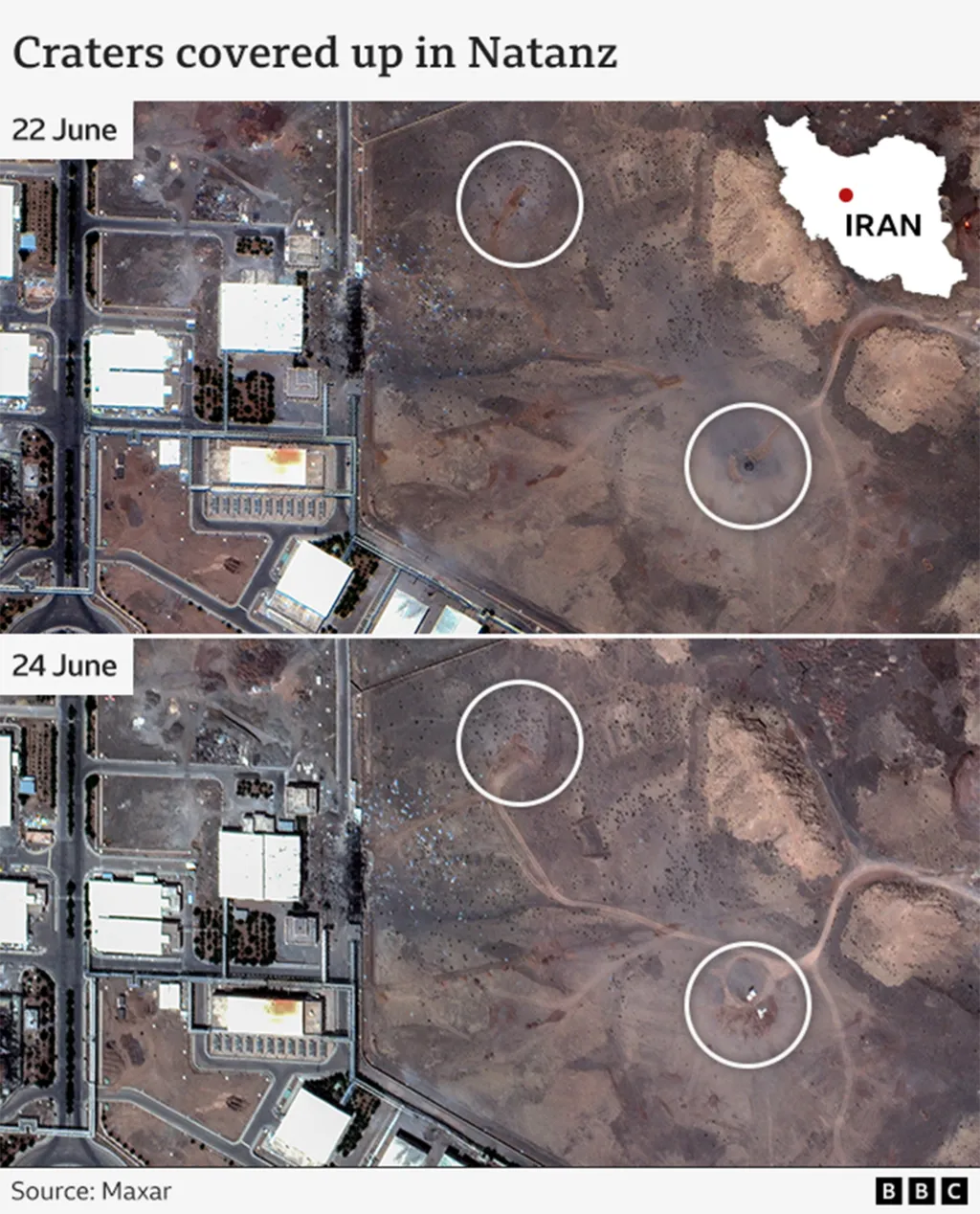
The U.S. military carried out precision strikes against centrifuge installation areas ;
-
Satellite images showed two craters, the target was suspected to be above the underground centrifuge room ;
-
Images from June 24 showed that the crater had been covered with mud and Iran appeared to be carrying out emergency repairs.
Analysis and interpretation :
-
ISIS agency analysis suggests Iran may attempt to cover up the crater and resume enrichment capabilities ;
-
The repair work may be just superficial repairs with limited recovery capabilities , but the remaining enriched uranium and spare centrifuges pose a threat .
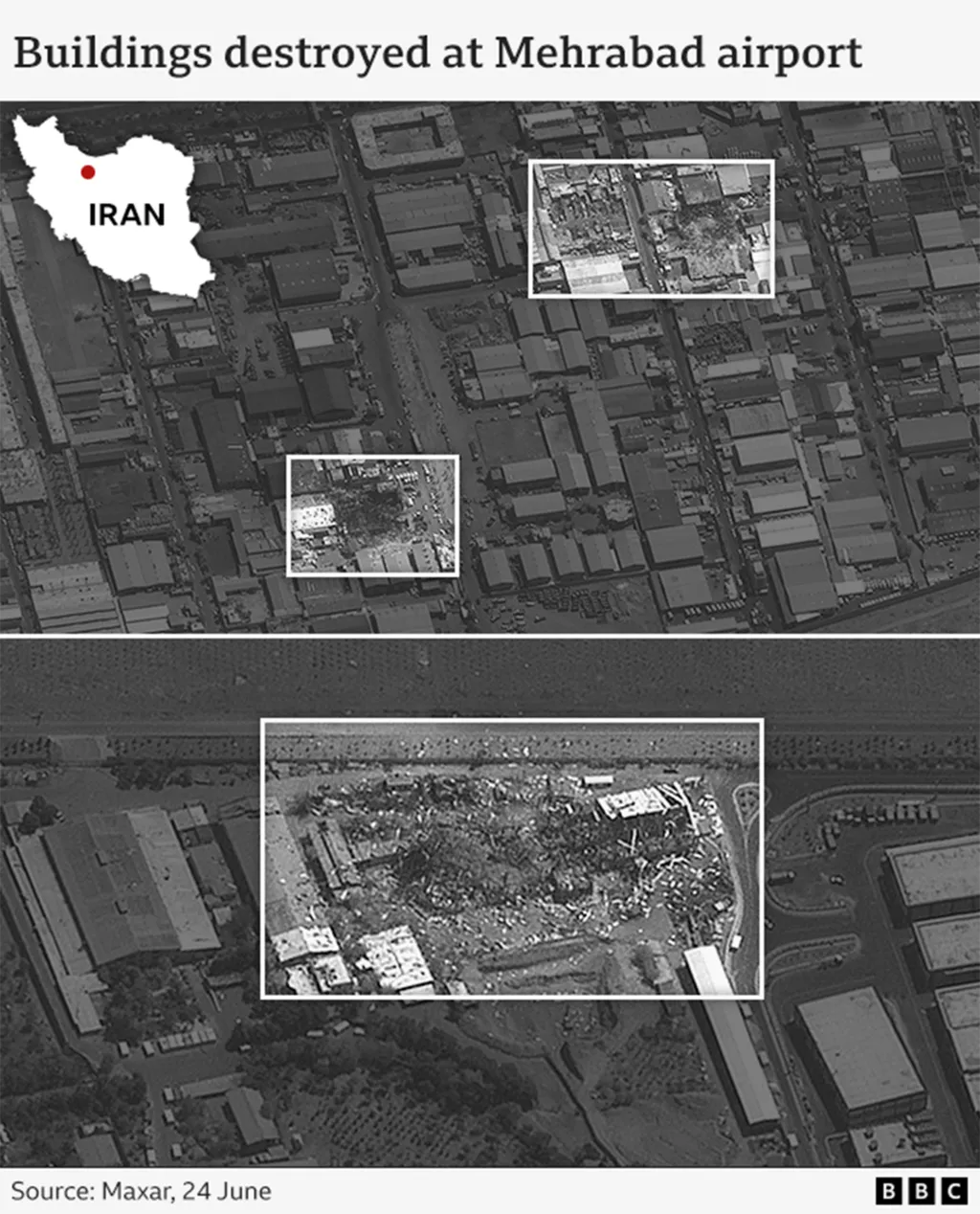
✈️ 4. Mehrabad Airport: Military targets hit
Location : West of Tehran, once Iran's main international airport.
Details of the attack :
-
Israel targets two vintage F-14 Tomcat fighter jets;
-
Several factories related to Iran’s defense industry were destroyed ;
-
At least one warehouse was completely destroyed .
The military-strategic significance of this area cannot be ignored. It is also a logistical support hub for Iran’s fighter jets, missiles and drone systems .
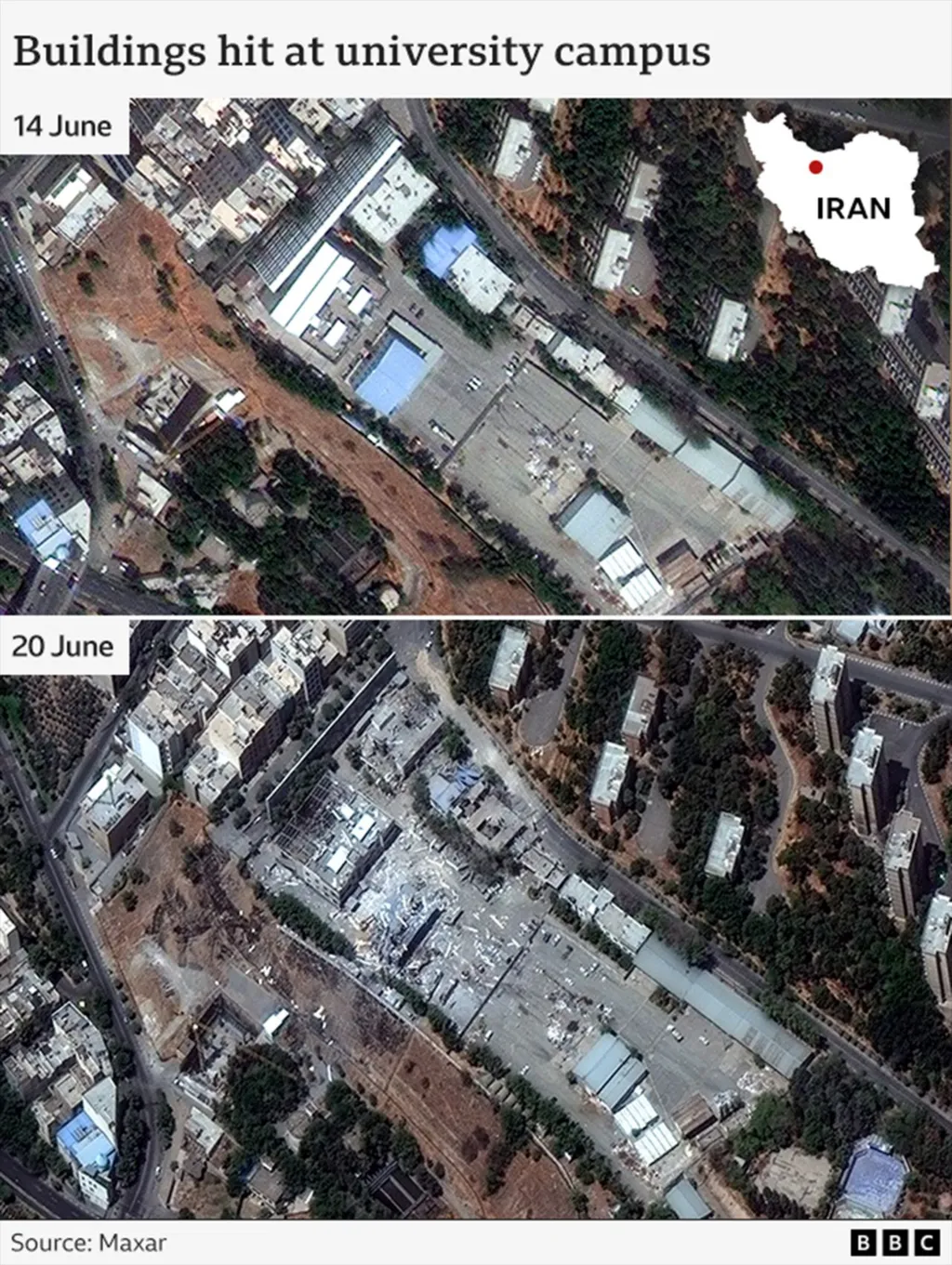
🎓 5. Shahid Rajai University: Technology facilities also attacked
Location : Ravizan district in northeastern Tehran, one of Iran’s important scientific research centers.
Description of the situation :
-
Satellite images and BBC video confirm that several buildings were destroyed in the conflict;
-
Analysts believe that the university may be related to nuclear technology research and has become one of the Israeli military's main targets.
🧠 Has Iran’s “nuclear dream” been destroyed?
Despite the severe physical damage caused by the US-Israel air strikes, Iran’s nuclear capabilities have not been completely paralyzed :
-
Existing stocks of enriched uranium (3.5%, 20%, 60%) have not yet been destroyed;
-
Unused centrifuges may be hidden in other locations that were not hit;
-
Technical talent and knowledge systems are still alive and well.
"Strikes cannot destroy decades of accumulated knowledge, nor can they stop ambition." - British Foreign Secretary David Lammy
🧩 Summary: A short-term blow or a long-term turning point?
This joint strike was the first time that precision strike weapons were used to carry out air strikes on deeply buried nuclear facilities . This is the biggest military suppression of Iran's nuclear program. The United States and Israel hope to weaken Iran's nuclear capabilities through strong actions and send a deterrent signal to other opponents.
However, whether tactical success means strategic victory remains unknown. Can Iran rebuild quickly? Will it continue to advance its plans through other secret facilities? These questions will determine the future direction of the situation in the Middle East.
Comment

.png?w=1024&h=1024)