
Israel claims to destroy Iran's nuclear capabilities: European experts see it this way
Jun 25,2025 | vape
Israel claims to destroy Iran's nuclear capabilities: European experts see it this way
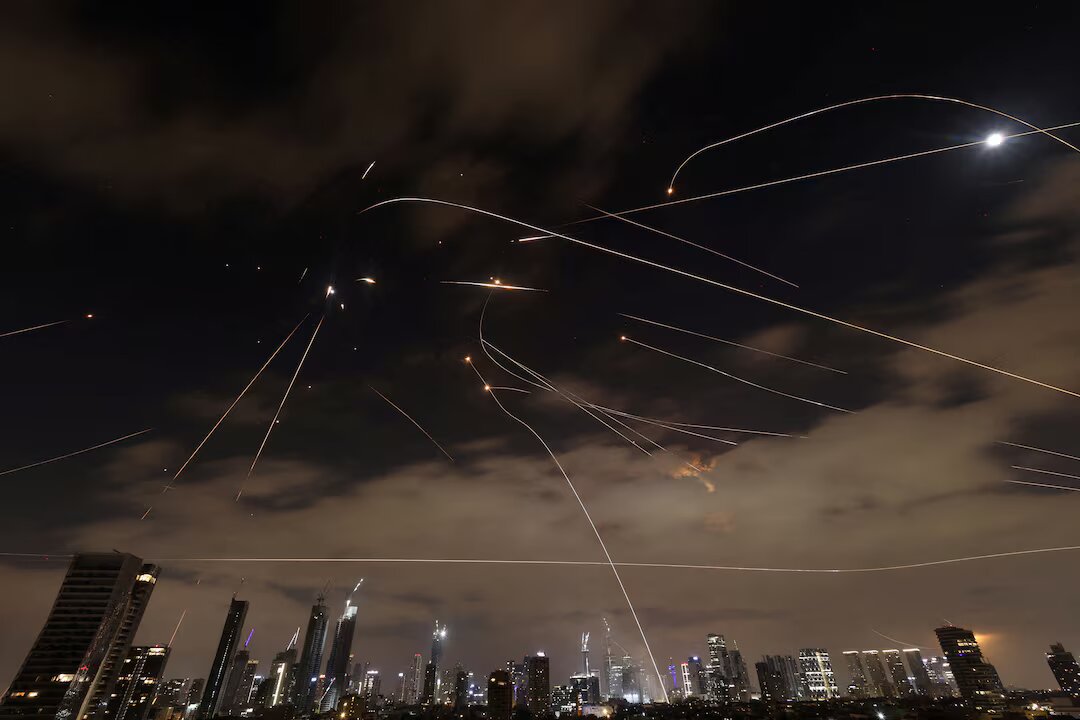
📰 Background of the incident: A game-changing blow?
In mid-June, the Israeli Ministry of Defense announced that it had successfully destroyed several key Iranian nuclear facilities in Operation Lion Rising, including the Natanz uranium enrichment center , the Fordow deep underground bunker , and the Isfahan research base . Prime Minister Netanyahu asserted in a televised speech:
"Iran's nuclear dream has been destroyed at its foundation by Israel."
Once this statement was released, global public opinion was in an uproar. European energy markets were shaken, and senior diplomats held urgent consultations. The question is: Did this "precision strike" really end Iran's nuclear capabilities?
🔬 What do experts say? More "weakening" than "destroying"
🧠 Viewpoint 1: The nuclear program is far more than just “blowing up a few buildings”
“Nuclear weapons development is not a factory, but a system.”
—David Albright, Institute for Science and International Security (ISIS)
Iran's nuclear program is distributed and modular:
-
The physical facilities are spread out widely, including the Fordow Center, buried deep beneath the mountain;
-
The knowledge system and human resource reserves are stable in the long term;
-
Most of the key equipment has been dispersed and transferred in advance.
Conclusion: Destroying some facilities ≠ ending the nuclear program.


🛡️ Viewpoint 2: European arms control experts emphasize that "the bunker protection layer is still there"
"Facilities like Fordow are built under 80 meters of rock, and it is difficult for ordinary missiles to destroy the interior."
- Claudia Major, defense and security affairs researcher at SWP, Germany
There is a general view in the European defense community that Israel did cause serious damage, but it was more of a delay in the nuclear process than actual eradication.
For example:
| facility | Geographical features | Current Assessment |
|---|---|---|
| Natanz | Ground and underground composite | Uranium enrichment facility partially destroyed |
| Fordow | Deep shelter, anti-penetration | Surface damage, core structure unknown |
| Isfahan | Research Center | Storage facility hit |
| Arak | Heavy water reactor | Equipment may be damaged, but reconstruction is expected |
🕊️ European official and media reactions: Caution, vigilance, emphasis on diplomacy
🇪🇺 EU Foreign Representative Borrell stated:
"The situation is escalating and reason must be restored through diplomacy and verification mechanisms."
-
France called on Israel to "provide concrete evidence" and launch a joint investigation with the International Atomic Energy Agency (IAEA);
-
Germany warned that such an attack could accelerate Iran's withdrawal from the Nuclear Non-Proliferation Treaty (NPT);
-
Nordic countries are concerned that Iran's retaliatory actions could affect Europe through cyber attacks or terrorist attacks.


🌍 The wider picture: What does this move mean for Europe?
🔌 Energy level: the strategic lifeline of the Strait of Hormuz
About 20% of the world's oil is exported through Hormuz. If Iran takes retaliatory actions such as blocking or attacking oil tankers, it will pose a real threat to Europe's energy stability.
"The energy lessons of the 2022 Russia-Ukraine war have not yet passed, and Europe can no longer afford a second 'energy shock'."
- Jean-Pierre Favre, energy strategy consultant at Total, France
🔐 Security and counter-terrorism
Iran or its regional allies could launch retaliatory hacking operations, intelligence penetration or terrorist attacks. European countries have been strengthening network and air port security.
🎓 Summarize European and international authoritative opinions
| expert | Nationality/ Position | Viewpoint |
|---|---|---|
| David Albright | American nuclear expert | Iran's nuclear capabilities delayed, but not destroyed |
| Claudia Major | Germany | Most nuclear capabilities have not been substantially destroyed |
| Ingrid Nilsen | SIPRI Institute of Sweden | The short-term impact is significant, but recovery is still possible in the long term |
| François Heisbourg | French strategic analyst | This move is more like a "tactical show" |
| Pieter de Vries | Dutch Foreign Affairs Expert | Europe lacks initiative and needs to promote the restart of multilateral nuclear mechanisms |
✅ Conclusion: Israel won a tactical victory, but did not end the strategic threat
-
Military level : Israel did strike key nodes;
-
Technical level : core capabilities and knowledge still exist;
-
Strategic level : Iran’s nuclear process has been blocked but not terminated;
-
European perspective : Diplomacy + energy defense should be the core to prevent conflict spillover.
The situation in the Middle East is no longer a distant conflict, but a mirror of Europe's own destiny.
Comment

.png?w=940&h=430)