
Iran-Israel conflict escalates, concerns about "World War III"
Jun 20,2025 | vape
Iran-Israel conflict escalates, concerns about "World War III"
In June 2025, a military confrontation that could change the Middle East broke out: Israel launched an air strike on Iran's nuclear facilities, and Iran immediately retaliated with missile attacks, drone swarm strikes, and even the first use of cluster warheads , which attracted great attention from the world.
After the conflict entered its eighth day, some observers and the media began to worry: Is World War III about to break out?
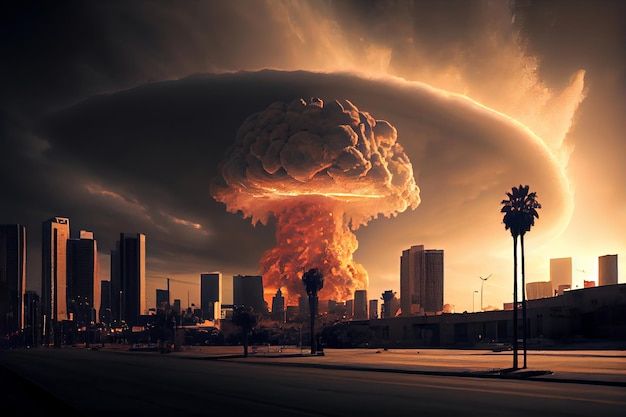
We understand the rationality of this concern, but from the perspective of strategic landscape, international relations, and historical experience , we believe that the world does not currently have the conditions for a Third World War to break out .
⚔️ 1. “Although the war has begun, it has not yet come to an all-out war” - the nature of the current conflict
The current conflict between Iran and Israel has the following characteristics:
| Dimensions | Performance |
|---|---|
| Limited tactical objectives | Israel focused on Iran's nuclear and missile facilities, and Iran's counterattacks were mainly aimed at Israeli military bases. The goals of both sides did not extend to large-scale urban destruction. |
| No declared war | The two sides have not officially declared war, and the international community still characterizes it as a "high-level military confrontation" rather than a full-scale war. |
| Nuclear weapons not used | Although nuclear facilities were involved, there was no nuclear attack, which is clearly different from total war. |
Even if the tactical intensity escalates, it is still within the scope of **"local war + high-intensity strikes"** rather than the scope of global war.

🌐 2. "Global powers maintain rational restraint" - the attitude of major powers is the key variable
What can really trigger a world war is the direct military involvement of major powers. Let's take a look at the performance of major countries in this incident:
USA:
-
clearly reaffirmed its commitment to Israel’s security;
-
But the military did not send troops to participate, nor did it promote a regional ground war;
-
President Biden said: "I don't want to see the Middle East get out of control again."
Russia:
-
Criticize Israel's attacks on moral grounds;
-
But no substantial military support was provided to Iran;
-
Publicly called on both sides to "ease tensions through regional dialogue."
China:
-
Strongly call for an immediate ceasefire, mediated through the Shanghai Cooperation Organization framework;
-
Promote a ceasefire draft in the UN Security Council;
-
"Exercise restraint" on military intervention.
✅Conclusion : All major powers did not choose to expand the conflict, but tried to "cool down rather than ignite it."
🔍 3. “The international system still has checks and balances” - the response of the United Nations and the global market
☑️ The United Nations responded quickly
-
The Security Council held an emergency meeting, and the five permanent members all supported the ceasefire motion;
-
UN Secretary-General Guterres said: "The world is burning and we should not add more fuel to the fire."
☑️ Financial and energy markets self-regulate
-
Although oil prices have risen sharply, OPEC+ countries have quickly pledged to increase production;
-
The Federal Reserve and the European Central Bank have made intervention plans for the risk of energy shocks;
-
Stock markets around the world stabilized after a brief decline, showing that the global system has not yet collapsed.
☑️ Geo-balancing mechanism is still in effect
-
Gulf countries such as Qatar and the UAE play a mediating role;
-
Türkiye and Oman proposed restoring diplomatic channels;
-
The Red Cross and several international NGOs quickly launched refugee and humanitarian aid mechanisms.
🔁 4. "The evolution of war can be traced, and world wars did not break out suddenly"
The two world wars in history have common characteristics:
| feature | World War I/II | Current Conflict |
|---|---|---|
| Multiple countries declare war | yes | no |
| Multiple fronts | yes | no |
| Involvement of major powers | yes | no |
| Nuclear weapons use | No/Yes (deterrence) | no |
| The rise of nationalism | High | Relatively controllable |
🧠 **History tells us that a real world war will not break out in an instant because of a regional conflict, but is the result of long-term accumulation and loss of control. **Although Iran and Israel are currently dangerous, the international community as a whole is still rationally regulating.
_1080x.jpg?w=1000&h=1000)
🕊️ 5. War is a disaster, and peace is mankind’s greatest asset
Although we do not believe that World War III will break out in this round of conflict, this war has already caused:
-
Hundreds of civilians died;
-
Hundreds of thousands of people in the Middle East have been displaced;
-
The global energy, logistics and humanitarian situations have deteriorated;
-
The media is full of fear and anxiety.
💬In a word: The cost of war always far exceeds its apparent "victory".
✍️ Summary:
Not every conflict will lead to a world war, but every war deprives us of the opportunity to have peace.
This conflict between Iran and Israel reminds us that peace cannot be taken for granted; it requires the joint protection of institutions, diplomacy, restraint and humanity and rationality.
Let us jointly call for: stop the war and return to the negotiation table.
Let reason prevail over hatred and let peace once again become the main theme of human civilization.
Comment

.png?w=940&h=430)