
Iran Urges Citizens to Spy on Neighbors Amid Growing Mossad Paranoia
Jun 18,2025 | vape
Iran Urges Citizens to Spy on Neighbors Amid Growing Mossad Paranoia
From masked men to drawn curtains, Tehran's latest anti-espionage campaign turns suspicion into a national duty.
As tensions between Iran and Israel boil over, Tehran is now turning inward—hard.
Following recent attacks that Iranian officials believe were carried out by Israeli intelligence operatives from inside Iran, the Islamic Republic has launched one of its most sweeping public surveillance campaigns in recent memory. The message is loud and clear: “If you see something, say something—or else.”
🕵️ The Trigger: Israeli Strikes from Within
On June 16, CNN reported that Israeli operations had allegedly been carried out from inside Iranian territory, reigniting Tehran’s long-standing fear of deep Mossad infiltration. These events have pushed Iranian intelligence into overdrive—turning every citizen into a potential informant.
The Ministry of Intelligence released an urgent call to the public, along with a new “Guide for Identifying Collaborators with Foreign Intelligence.”
📜 The Guide: What to Watch For
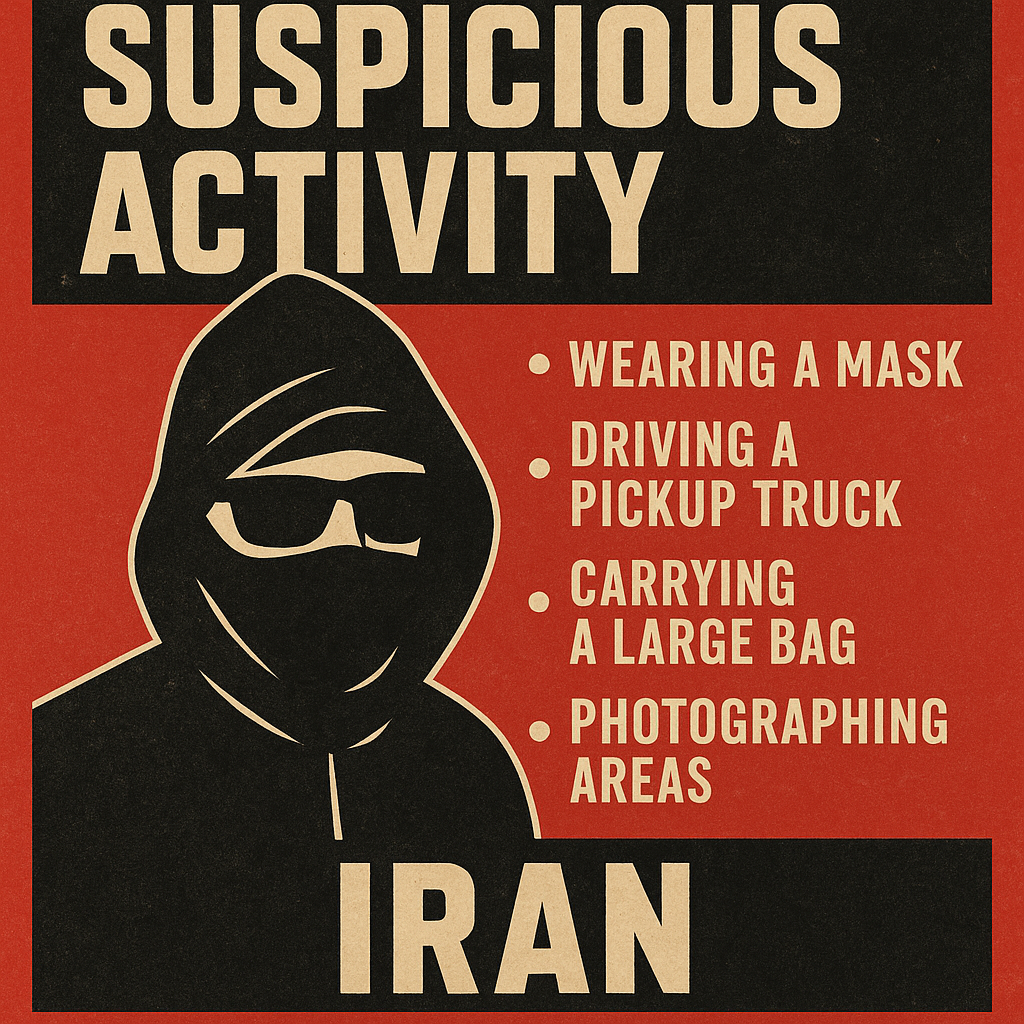
According to the Iranian Ministry of Intelligence, suspicious individuals may:
-
Wear face masks, goggles, hats, or sunglasses at night
-
Drive pickup trucks or vans near military, industrial, or residential sites
-
Carry large backpacks or frequently receive parcels
-
Photograph sensitive areas, even from a distance
-
Keep curtains drawn even during the daytime
-
Cause strange noises inside homes—such as screams, clanging metal, or repeated banging
Sound like a spy thriller? It’s not fiction. It’s an official directive.
One widely shared poster by Nournews—a media outlet tied to Iran’s Supreme National Security Council—shows a man in sunglasses and a hoodie lurking in the dark, warning citizens to report anyone exhibiting “foreign behavior.”

🧱 Neighbors Watching Neighbors
The campaign goes even further. The Fars News Agency, a state-controlled outlet, advised landlords who recently rented out properties to immediately report new tenants to local police—no proof required.
This new wave of public vigilance marks a step beyond traditional state surveillance. Now, Iran is effectively outsourcing intelligence work to the public—and asking them to surveil each other based on vague, easily misinterpreted signs.
Critics have called this “a recipe for mass paranoia.”
🌍 Global Reactions
-
Human Rights Watch slammed the program as “a systematic erosion of personal privacy and community trust.”
-
Analysts warn that the campaign could lead to false accusations, communal tensions, and extrajudicial detentions.
-
Iranian dissidents abroad say this signals the regime's desperation: “They no longer trust their own institutions. They’re asking housewives and cab drivers to find the Mossad.”
Meanwhile, some Iranian users on social media platforms—despite censorship—have begun posting parody versions of the posters, mocking the idea that sunglasses and Amazon packages equal espionage.
🧠 Why It Matters
This isn't just about spies.
It's about how authoritarian states react when they feel under siege—not just militarily, but ideologically. Iran’s attempt to control its narrative and territory includes a new form of social policing, where fear becomes the glue holding loyalty together.
In Tehran's eyes, a man in a hoodie with a GoPro might as well be a Mossad assassin.

⚠️ Final Thought
From cyber sabotage to covert operations, the Iran–Israel shadow war is intensifying—and now it's landing squarely in the living rooms of ordinary Iranians. With vague suspicions becoming police matters and privacy being sacrificed for paranoia, Iran’s internal front line may prove more dangerous than any drone strike.
Welcome to the surveillance republic, where your neighbor might be the next intelligence officer—and your curtain might be your crime.
Comment

.png?w=940&h=430)